
FCOA CLIMBER PROGRAM
FCOA CLIMBER program
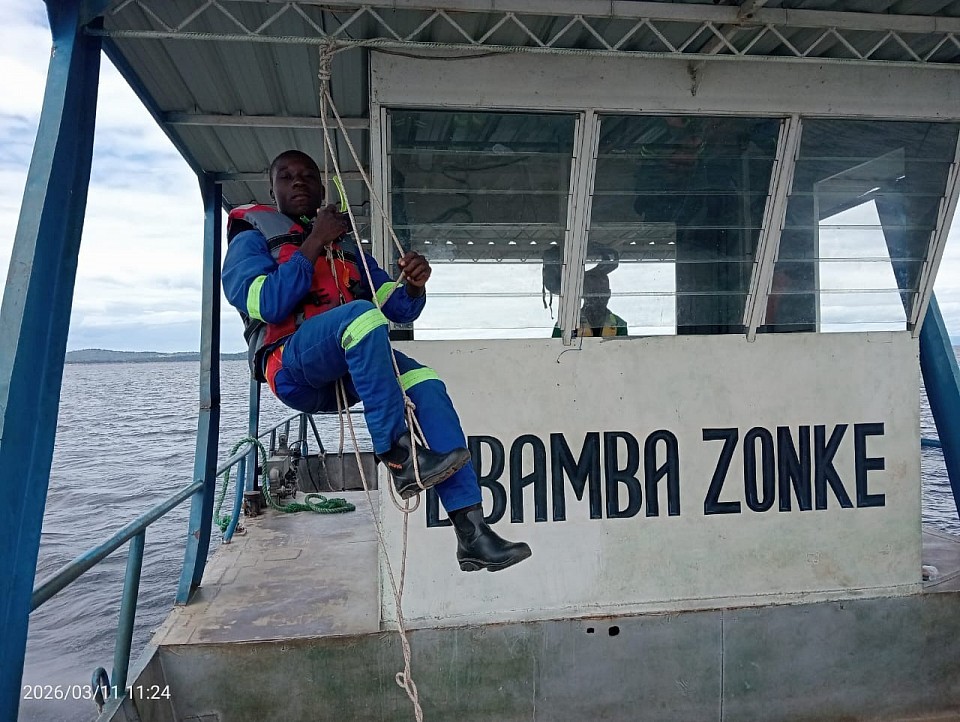
Improvised Climb training on the move
program came to exist for 2 reasons.
1. Climbing skills are now an additional prerequisite for FCOA lifeguard certification. This will aid rescues from water wells and high ships.
2. Its now also a prerequisite for FCOA solo sailor certification. Since sailors occasionally have to climb in their masts.
The training module is available on fcoa.online under digital training.
FCOA Improvise Climbing
Most people in the world don't have access to specialized climbing gear. Also, when you're on top of a burning building, you will just have to use what is available. For this training, all you need is a random 15 meter rope from your local hardware store. (Ø 10 mm)
180.000 people per year die due to fires. Many could have saved themselves if they would have been able to rappel from their burning building
Risk Management:
During this training we recommend to not climb higher then 2 meter and to keep an old mattress under your climbing area. The development of climbing skills takes time. It's good to practice new skills close to the ground. Use common sense and develop your judgement. Take responsibility of your own safety and don't just trust anyone till that trust has been earned.
This improvised climb training is available for anyone that can get online and is meant to reduce the risks involved in our natural climbing journey. This training is somewhat different than most other trainings where they will be very specific about what specialized equipment to use.
We humans are primates and just like Orangutans and Chimpanzees, it's in our genetics to develop climbing skills. By doing so we can reach the best fruits and stay away from the wolves. Sometimes we fall, get injured and some even die, but most of the time we just bruise and evolve. As much as possible learn from mistakes that are already made by others. Good for you if you can find a climbing instructor. But if not, don't let it stop you from practicing improvised climbing basics at home.
Some Definitions
Top rope climbing: This is the safest way of climbing with a rope from the top, if you slip or fall, right away you're hanging in the rope.
Free style climber. Any climber that climbs without specifically agreeing with a competent belayer to be belayed.
Lead climbing: the first person to go up to deploy a rope. This is at a higher risk, when falling the climber will fall twice the height that he is above his last anchor.
A competent belayer (FCOA definition): A belayer that has at least 3 times responded appropriately to your unannounced fall in the last year with the equipment types and environment he/she is familiar with
Backup Belayer: An experienced belayer that assist when the primary belayer is still developing his skills. The back up belayer will hold the rope that comes from the belayer so in case the belayer lets go, the backup belayer will prevent the climber from falling.
FCOA Improvise Climbing
Most people in the world don't have access to specialized climbing gear. Also, when you're on top of a burning building, you will just have to use what is available. For this training, all you need is a random 15 meter rope from your local hardware store. (Ø 10 mm)
180.000 people per year die due to fires. Many could have saved themselves if they would have been able to rappel from their burning building
Risk Management:
During this training we recommend to not climb higher then 2 meter and to keep an old mattress under your climbing area. The development of climbing skills takes time. It's good to practice new skills close to the ground. Use common sense and develop your judgement. Take responsibility of your own safety and don't just trust anyone till that trust has been earned.
This improvised climb training is available for anyone that can get online and is meant to reduce the risks involved in our natural climbing journey. This training is somewhat different than most other trainings where they will be very specific about what specialized equipment to use.
We humans are primates and just like Orangutans and Chimpanzees, it's in our genetics to develop climbing skills. By doing so we can reach the best fruits and stay away from the wolves. Sometimes we fall, get injured and some even die, but most of the time we just bruise and evolve. As much as possible learn from mistakes that are already made by others. Good for you if you can find a climbing instructor. But if not, don't let it stop you from practicing improvised climbing basics at home.
Some Definitions
Top rope climbing: This is the safest way of climbing with a rope from the top, if you slip or fall, right away you're hanging in the rope.
Free style climber. Any climber that climbs without specifically agreeing with a competent belayer to be belayed.
Lead climbing: the first person to go up to deploy a rope. This is at a higher risk, when falling the climber will fall twice the height that he is above his last anchor.
A competent belayer (FCOA definition): A belayer that has at least 3 times responded appropriately to your unannounced fall in the last year with the equipment types and environment he/she is familiar with
Backup Belayer: An experienced belayer that assist when the primary belayer is still developing his skills. The back up belayer will hold the rope that comes from the belayer so in case the belayer lets go, the backup belayer will prevent the climber from falling.
EQUIPMENT AND KNOTS
Woody Vines, Lianes and Ropes
King Kong, Tarzan and many other primates often use woody vines to swing from one tree to another. Humans are more likely to use ropes. People around the world use ropes of all sorts for all kinds of climbing purposes. Worldwide the most used ropes for climbing are not officially rated climbing ropes. The break strength you want your rope to have depends on what you want to do with it. If you tie a swing above the pond, you will not care if it breaks because you would just fall in the water. During your improvised climber course ideally, you practice above a mat not higher then 2 meter, in this way you can test and try all sorts of ropes. If they break you can still hurt yourself so exercise your judgment, but you are not likely to break bones. Once you start your Top Rope climber course you might want to use well maintained certified climbing ropes for peace of mind.
Notes of caution about ropes
Keep ropes clean: Do not stand on ropes! Especially if the ropes belong to climbers, they might make you buy them drinks every time you stand on the ropes. Lead climbers often put the rope in their mouth before clipping it into the next anchor so they like it to be clean. Also, with your shoes you will be pressing sand grains into the rope.
If a rope is used for fall protection it has to be even stronger. It does not only have to carry your weight it has to absorb the jerk of the fall. This is called the fall factor and can get calculated. Rock climbing ropes have a breaking strength of around 500 kg. Besides that, they are dynamic, this means they stretch a bit like a rubber band, this stretching absorbs some of the energy and makes the fall less jerky.
If the rope hangs over a sharp edge it will have to be stronger again you probably would want it to have a protective sleave or any other improvised layer of protection (an innertube of a car or a towel)
The thinner a rope the faster it will get cut through by a sharp edge.
Ropes loose strength with age, this weakening accelerates due to: Sun, frequency of use, and the rope being dirty.
How can you asses the strength of a rope?
Documentation: Some ropes come with strength information from the factory.
Load testing: You could hang on it with a certain number of persons and see if it holds.
Stretch testing: You can measure how much it stretches when you hang on it. Precisely tape mark 1 meter of rope length, now hang a load on it and measure how many millimeter that 1 meter of rope has stretched. Afterward check if the rope goes back to its original size.
Destructive testing: Apply enough weight on a rope to make it snap. HowNottoHighline
Time testing: Leave rope samples in the sun for a few months and then test them again.
Carabiners
Most hardware shops sell steel carabiners. (10mm or more should do the job) Even though these are not rated for climbing, steel carabiners are usually stronger than the aluminum once produced for climbers. The downside is that they are heavier.
2. KNOTS
When you learn knots also learn the common mistakes so you will recognize it when a knot is faulty.
Double eight knot and how to set an anchor
Reef knot/ Chinese Flat knot/ square knot
RAPELLING/ABSEILING
How to rappel if you only have a rope
Imagine your building is on fire including the staircase and the elevator. The only way to save yourself is by hanging a rope out of the window. It's a 10 story high building so you can't just climb with your hands. You will have to rappel.
First you tie a rope harness, then use the loose end to tie an Italian hitch to the belay loop (or tie it to a carabiner if you have one, that would be better for the rope). then tie the rope to an anchor point. The preferred knot is the double figure of eight knot but it would be faster to tie a bowline. Or as the saying goes: If you don't know how to tie knots, tie lots. After all, if there is a fire there might be no time to practice fancy knots on YouTube.
Notes of caution when tying an anchor
If you don't trust the anchor point, consider using multiple anchor points
If there are sharp edges then wrap a protective layer around the rope, this can be a towel or an innertube of a car.
If tying on a standing poll or tree, tie as low as possible so the knot cannot slip down while you're hanging on it.
If you use carabiners, Be sure your carabiners are not loaded sideways, and make sure to close the screw gate.
The words rappelling and abseiling can refer to different ways to go down a rope, usually with some kind of friction device that allows you to control your descending speed.
The amount of friction can get regulated by keeping tension on the loose end of the rope. The more tension you apply the slower you slide, eventually coming to a full stop.
Notes of caution about rappelling
When you're a first timer make sure to have a backup belayer.
Don't forget to close the screw gate on the carabiner, if it stays open the rope could accidentally come out.
Make sure to have your belaying hand under an angle that assures the most friction.
Once you hang take a moment to relax all the muscles that you don't need. Gravity is in your favor, when done right, rappelling can get done with minimum energy and at a low heart rate. Being tensed while rappelling can quickly lead to exhaustion and panic. You should be able to rappel using just one hand. The other hand should be completely relaxed. You should not cling to the rope.
Your legs should be under a 90 degree angle against the rock. In that way you can never slip. Not even if the wall is made out of ice.
Getting long hair in the device. Make sure to have no loose items like hair, clothing items, strings near the device.
Friction decreases when the rope gets wet or muddy.
Not holding the controlling rope in the optimized position
Running out of rope before reaching the bottom. This can be prevented by keeping a knot at the end of the rope and by doing proper measurements.
Dropping items, this can kill someone underneath you, do everything you can to not drop or loose items. If you do call out "Rock Rock Rock" so people under you can step away or brace.
When tying a locking slip knot, be aware that the weight of the rope alone could pull the slip knot out.
Beginners often make extra rope twists or turns. You should always choose the shortest option to tie a knot. No additional bends, loops or twists.
Avoid shock loading the rope since you have only limited knowledge about its strength. Lower into it gently, avoid jerky movements.
Apply forces on the rope in a vertical direction, when forces are not vertical the rope is more prone to slipping and cutting itself on sharp edges.
The Exercise
Tie the rope harness and let your buddy check it. (If the harness hurts, then remember where to modify it for your next climb)
On horizonal ground tie the Italian hitch on your belay loop (or on a carabiner if you have one)
Tie an anchor point and let your buddy check it. (recommended beginner height: 2 meter or less)
Test the anchor point by hanging on it with r2,3 or 4 friends.
Practice self-belay horizontally.
Practice making a locking slip knot horizontally (minimize slippage)
Practice making a securing hitch horizontally.
Practice taking out the securing hitch and the locking slip knot and go back to self-belay (minimaze slippage)
Now practice the same thing vertically, rappelling down, making a locking slip knot,
Pretend to black out, allow your back up belayer to pull out the locking slip knot to further lower you.
Once again tie a locking slip knot, this time secure it with an extra hitch.
Relax your body for a few seconds, don't hold anything in your hands, learn to trust your equipment.
Unlock and continue down.
Once touching down give some slack to steadily stand on your legs before you go off belay.
Interesting facts:
You don't even need a carabiner for rappelling. In case of an emergency, you could tie an Italian hitch directly to your belay loop. As you rappel the rope will be eating away on the belay loop so keep an eye on that but at least you can escape your burning building.
For your anchor point you can use any knot. If you don't know how to knots, tie lots. The consequence might be that it's hard to remove, but at least it's fast.
ASCENDING
Going up a rope by prusiking . Watch this prusiking video
Imagine the wolves are coming and they will eat you unless you can prusik into a tree in the next 5 minutes.
While we initially practice this not higher then 2 meter. You could pretend you have to go up 10 meter meaning you wouldn't want to climb the rope by hand.
The most economic option to accent a rope is by prusiking, it requires two chords of between 4 and 8mm thick that get tied around the climbing rope with a prussik knot. The prussik now squeezes around the rope and that is how it locks. You will have a foot chord prussik of approx. 2 arm spans long. And a belay loop prussik that should be about 1 meter long.
Notes of caution when prusiking:
It's easier to go up than to go down. It's possible to get exhausted and to get stuck not being able to move. When trying it for the first time it can be good to have a ladder ready to step off when tiered.
When the rope gets wet or muddy the prusiks might have less friction.
If the prusik on the harness is too long, quickly efficiency is lost but if it's too short it becomes hard to transition to rappelling.
On the way down don't pull the belay loop prusik to low because you won't be able to reach the footstep prusik anymore.
Consider tying an extra safety line to catch you if your prusik chord breaks
Avoid shock loading the rope since you have only limited knowledge about its strength. Lower into it gently, avoid jerky movements.
Apply forces on the rope in a vertical direction, when forces are not vertical the rope is more prone to
slipping and cutting itself on sharp edges.
The exercise
Create a rope loop anchor above a grass area (Recommended height 2 meter)
Tie your rope harness and get it checked by your buddy.
Hang a carabiner on the belay loop
Tie a prusik foot chord
Tie a prusik knot that you connect to your belay loop with a bowline
Prusik up the rope till the top.
Prusik down one meter to feel the difference between prusiking up and prusiking down.
Transition from prusik to Italian hitch: Attach your carabiner to the climbing rope with an Italian hitch below the bottom prusik.
Free up your hands to do a job: Block and secure the Italian hitch with a blocking slip knot and a security hitch.
Prusik down till the bottom prusik is on top of the Italian hitch
Now undo both the prusik chords and store them on your belay loop
Unblock the Italian hitch and rappel down.
BELAYING
Belaying is a system where a person called a belayer secures a climber. Before the climb the belayer would check if the climber's harness, carabiners and knots are secure. The belayer then runs the climbing rope through his friction device and in case the climber falls the belayer would stop the rope from moving assuring the climber only drops a limited height.
Communication is key, especially when the belayer cannot see what the climber is doing. The Belayer and Climber should agree on what commands to use.
Notes of caution about belaying:
Before belaying, do a buddy check on each other: Are the harnesses tight and secure, carabiners closed, are all the knots involved good, is the helmet strap closed, no free hanging hair, no rings or chains? If anything needs changing, let the climber change his own equipment, don't do it for him.
Horizonal practice. Before climbing with a new partner or when you have new equipment. This is a good opportunity to discuss differences and protocol.
Keep an eye on the rope above you, make sure it does not end up rubbing on any sharp edges once you lower yourself.
Maintain your focus, in the beginning 20 minutes of focused belaying might be enough.
Have a backup belayer while belaying skills are developing.
Make sure the sliding rope is not sliding over rocks
Make sure the carabiners are no