
Join the Adventure: Explore FCOA Sailing Programs!
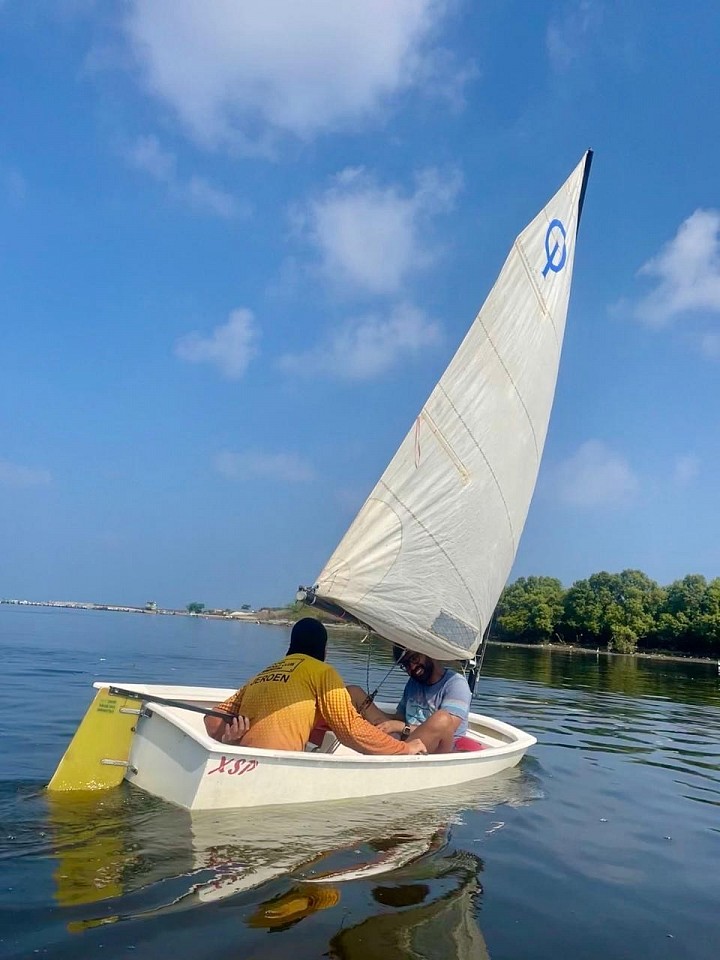
A coach demonstrating maneuvers to a student in an optimist
Be a diver before becoming a sailor
The FCOA sail training is designed for FCOA members and you must have passed the 200 meter swim test before you can start. Ideally you are already an FCOA Freediver before you start this lesson. Not a member yet? Register on FCOA.online and start your online study.
Some benefits of being a freediver when sailing:
- In case your boat capsizes you have some breath holding capabilities to get yourself and other crew members to safety.
- Doing an anchor check to see if it did dig in and in case your anchor gets stuck you can dive down to unhook it.
- If your boat has no engine and if there is no wind, a freediver can pull and maneuver a boat for docking purposes. This is an unusual practice but can be very practical.
- You can do the underwater maintenance of a boat without needing a lift out or scuba gear. In salt water boats require periodic haul cleaning, anodes need to get replaced and an occasional rope caught by the propellor will need to get cut out.
FCOA SAIL PROGRAMS:
- FCOA Dive&Sail : an introduction to sailing where after a short demonstration you start sailing yourself under the supervision of a coach. Possible your coach allows you to sail solo for a few tags and jibes by the end of the session.
- FCOA SOLO SAILOR: A training towards independence. One of the passing requirements being: to collect 10 solo sailing hours
- FCOA RADIO OPERATOR: Learn to use a marine radio
- FCOA SAILING INSTRUCTOR: The biggest passing requirement being: For coaches to collect 30 teaching hours.
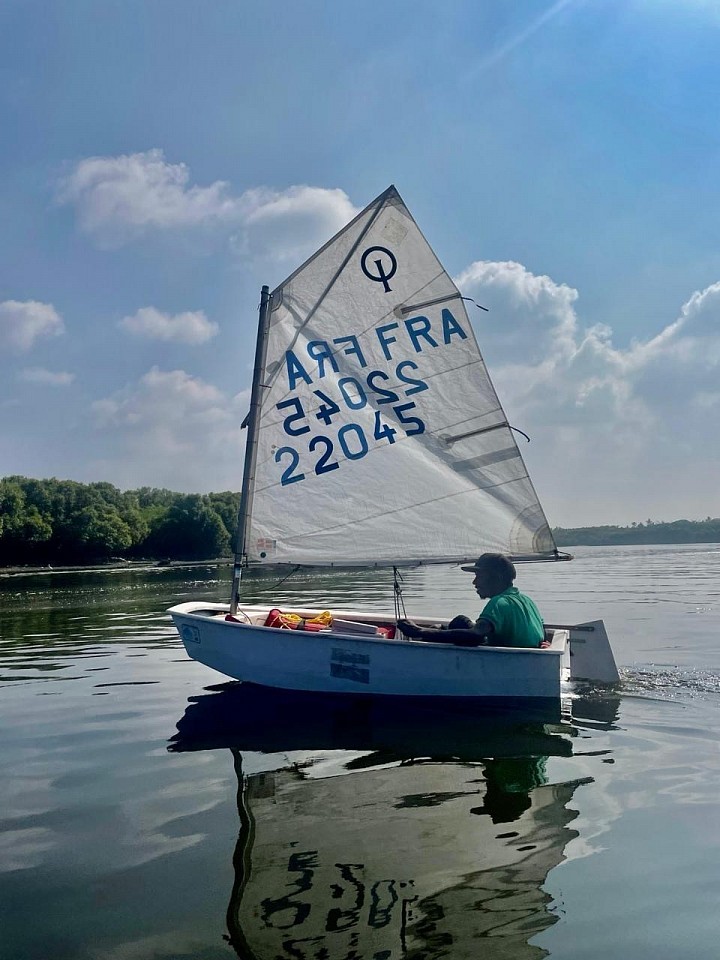
First time sailing by yourself. Sailing an Optimist. Worlds most use training sail boat.
FCOA SAIL & DIVE
Prerequisites
- FCOA SWIMMER 200 m certified
- Completion of the FCOA Sail&Dive quiz
Time plan for this introduction to sailing
(Approximately 4 hours, this is simply a suggested time, feel free to agree on other timings)
- 1 hour briefing on boat preparation and boat handling
- Sailing with a coach for 30 minutes
- 100 meter paddle practice
- 50 meter swim towing your boat
- Capsize recovery
- Sailing solo for 30 minutes (if your ready for it)
- Sailing with a coach for 15 minutes
- Man Overboard Procedure
- Dropping and lifting an anchor
- Debriefing
- Logging your sailing experience in your logbook
- Posting something to #keep_our_waters_clean
- Making plans for your FCOA SOLO SAILOR certification training (2 or 3 days)
Different sail boats require different skills. An optimist can capsize so you have to learn how to recover from it. While bigger boats hardly ever capsize and many of them are designed to be self-rightening. Bigger boats often require sailors to learn mast climbing. Your coach will introduce you to the skills needed to operate your training vessel.
Most common training sailboats
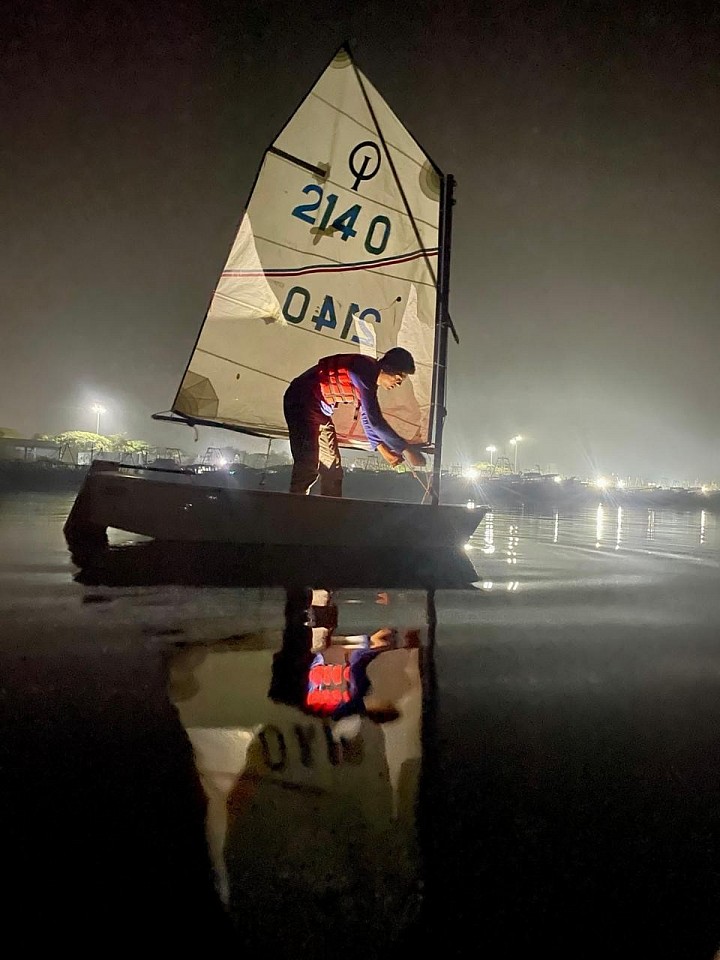
We recommend our trainees to experience night sailing.
FCOA SOLO SAILOR
This unique training will test your independence like no other course. Once completed you will have logged at least 10 solo hours. A well maintained personal sail log tells a lot more about a sailors experience and record keeping skills then any certification will. Once you are FCOA SOLO SAILOR certified you hold a certificate that can get verified online. And those that will consider taking you on as a crew member can see the extensive training you went trough. An FCOA SOLO SAILOR is not only trained in sailing skills. He is also a freediver with mast climbing skills.
Prerequisites:
- FCOA FREEDIVER certified (or equivalent)
- FCOA Dive&Sail certified
- Completion of FCOA quiz 1 till 8
- Completion of FCOA quiz Dive & SAIL
- Completion of FCOA quiz SOLO SAILOR
Mandatory skills for solo sailors to masterSailing to a coordinateReporting position over phone or radioApplying a preventer (if possible)Man Overboard ProcedureAnchoringIndependently rigging the vesselAccending the mast (or up a tree), in case your rope comes out of the mast you'll be able to put it back.
Mandatory skills to master:
- Tacking
- Jibing
- Stopping
- Man overboard procedure
- Anchoring
- Birthing
- Navigation (Your coach will give you coordinates to sail to)
Optional additional skills to master (Vesel dependent, if the skill is possible it's mendatory)
- 50 meter swim towing the dingy
- 100 meter paddling the dingy
- Capsize recovery
- Skulling
- Preventer use
- Sailing in waves: When circumstances allow, this is a great confidence builder
- Sleeping overnight on your dingy: This would be a good "Lost at Sea" training, and it will answer many questions like...How good can you sleep on a dingy.
- Ascending the mast if the mast is suitable for it.
PASSING REQUIREMENTS:
- Passed the theory
- Mastery of the skills required to operate the training vessel
- Ten logged solo sailing hours
- FCOA improvised climber certified
FCOA SOLO SAILOR certification purpose and limitations
- Once your coach approves your FCOA SOLO SAILOR certificate he does so because he considers you ready to further sail by yourself in the same boat type and waterbody type without needing any supervision.
- You will have been trained to take care of that boat, and it will have been noticed that you sail it with caution and foresight.
- You are not trained to sail just any boat or any water type.
- For any other boat or other water type you will need additional training.
- You're not trained to be a crew member for racing competitions. If you would join a race there would be a lot of extra skills and knowledge to acquire.
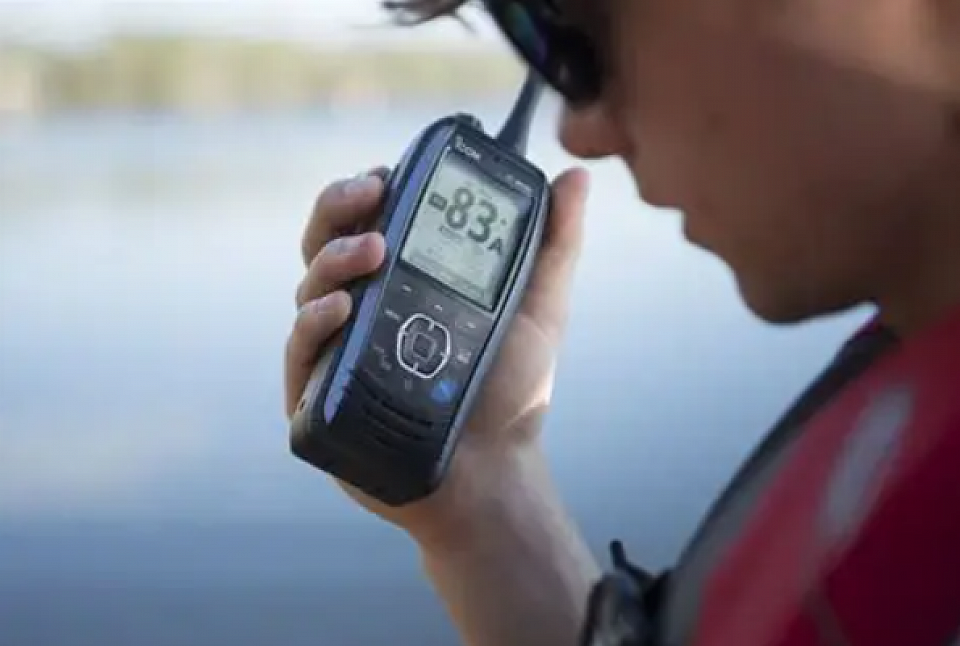
Hand held Marine Radio
Enhance Safety with FCOA's Radio Operator Training
This block discusses the regulations surrounding the use of marine radios and the importance of understanding local laws. It encourages sailors to practice using radios and provides resources for improving radio communication skills, especially for emergencies.
Local Regulations
Every country has their own laws about who can and cannot use a radio, make sure to investigate those rules.
There is one International Marine rule that states "we should do everything in our power to avoid collisions and injuries". If this includes using a marine radio without the proper license, then authorities should not judge too harshly. But don't take anything for granted. There are places where they will use any excuse to fine you, confine you or confiscate your belongings.
Noonsite.com - The Ultimate Cruisers Planning Tool is used by sailors around the world to plan their international voyages.
Many sailors never use radios, others use them every trip. A good way to become a proficient radio user is to buy an economic one and start listening to different channels, try to understand the messages and get used to the jargon.
This Quiz should prepare you for daily radio calls and emergencies. If you want to know more then have a look at those manuals: IMO radio procedures / Indian Radio use
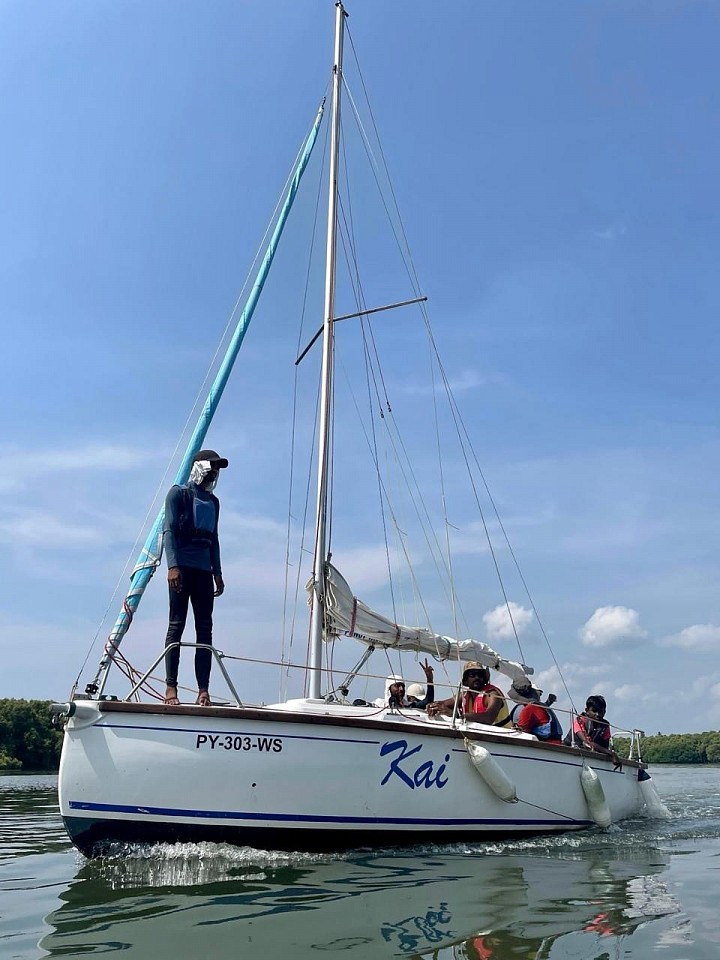
Sailing the KAI in Pondishery, India
Train the Next Generation: FCOA Sailing Instructor Program
This section outlines the pathway to becoming an FCOA Sailing Instructor, including the necessary certifications and experience required. It emphasizes the importance of supervised teaching and additional training in lifeguarding and radio operation, ensuring instructors are well-prepared to teach sailing skills effectively.
Once an FCOA COACH has completed their FCOA SOLO SAIL training they can start participating in teaching under supervision. In that way they can continue learning from someone more experienced and they can start collecting their supervised teaching hours. On top of that there is some extra training required. FCOA SAILING INSTRUCTORS must also be certified FCOA LIFE GUARDS and radio operators. And they must be able to teach improvised climbing.
Starting Prerequisites
- FCOA COACH certified
- FCOA LEADCOACH in training
- FCOA SOLO SAILOR certified
Passing requirements:
- FCOA LEAD COACH certified
- FCOA LIFEGUARD certified
- FCOA Radio Operator certified
- FCOA Improvised climber certified and able to teach it.
- 30 logged teaching hours under supervision.
- Completion of the FCOA SAILING INSTRUCTOR quiz.
- Able to teach all sailing topics at instructor level
Sail Smart: Tips for Staying Safe on the Water
The moment we choose to get in a sailboat we are exposed to a range of risks. Experienced sailors sometimes don't return back to land. Every year sailing boats go missing never to be found. The best we can do is to accept those risks, to manage them and to learn from mistakes made by others.
How to manage risks in sailing?
- By being a swimmer and a diver, you greatly reduce the biggest risk in sailing which is drowning. When everything goes wrong your boat might be sinking but if your prepared you should be albe to get your self back to safety.
- Keep your emergency contact in the loop. Be detailed where you go and what you want your contact to do if you don't call back by a certain time.
- Practice small before going big. Avoid losing focus, avoid exhaustion. Exhausted sailors are prone to make big mistakes that they would not make when well rested.
- Take responsibility of your own safety, don't trust to easily. Do your own weather check. Trust your feelings. If your not happy with a proposed plan, then alter it to a version you consider acceptable.
Equip Yourself: Affordable Sailing Essentials
Get your personal sailing equipment right! It does not have to cost much. It's more about preparation then about costs.
The following items you probably have in the house and can be very practical and in some instances they can safe your life.
- A tupperware box or any other container to keep your mobile phone dry.
- A knife
- A waterproof light
- Drinking water
- A lighter
- A hand held marine radio
- A personal locator beacon.
Regardless of your experience and where you go sailing or who you plan to be with, take responsibility for having your own personal equipment. Don't rely on others to be organized. Maybe they are maybe they are not. Have your own items ready to help yourself and they crew your planning to be with.
Explore Amazing Sailing Spots with FCOA!
Puerto Galera, Mindoro Philippines.
FCOA offers regular sailing courses in Puerto Galera on island Mindoro in the Philippines. This is an ideal lagoon to learn sailing. Thanks to the protection of the lagoon it's possible to practice without risking to get blown to open sea. The lagoon has multiple dive sites and beaches a beginning sailor could explore.
Calapan, Mindoro Philippines
We do sail in Calapan but the weather does not always allow it. If that is the case we divert to Puerto galera which is 90 minutes away by public transport
Pondishery Yacht Club, India
We collaborate with Pondichéry yacht club. FCOA FREEDIVERS can sign up for their Solo sailor courses once they complete their quizzes.
Hear What Our Trainees Are Saying!
2 things I loved
1) the coaches who were very generous with their time and effort. It was very inspiring to hear how everyone got into the sport and puts in continuous efforts to make it accessible to others. I'm not sure I would have been able to do sailing training if fcoa and you guys weren't doing this..
2) it was amazing to see Rohini and Tejas get very involved in this. It gave me confidence that if these kids can do this I could do this too. Also it was a great reminder that age doesn't define a teacher but the knowledge and the willingness to share the knowledge.
Jacob
Thank you Sridhar, dhvinay and Jeroen.. it was a wonderful learning experience.. Thanks for patiently explaining and also giving intricate tips everytime we got out of the water. A huge thanks to Tejas and Rohini, their enthusiasm, coaching and guidance with sweet innocence brought in a whole new flavor and energy to the workshop.
I can still hear Tejas shouting 'Harish, harish' whenever I was docking or going wrong 😃😃
Thank you sridhar for bringing them .
It was a profound experience for me on multiple levels. Huge thanks to sridhar and dhvinay for taking time out to do this and Jeroen for bringing this to India. Immense gratitude to all of you 🙏✨
Harish
Upcoming Events or Workshops
We run a yearly sail training event in Pondichéry India every February. Individuals can also make individual appointments for FCOA Sail training. Contact Anja for details +91 98940 42756
In Puerto Galera Phippens we give tailored sail trainings. Good for those that want a personal trainer. Just reach out to Jeroen Elout to discuss details. +639174489590
Got Questions? We’ve Got Your Sailing Answers!
Q: Do I need a license to sail a sailboat?
A: In most countries you don't need a license to sail a sailboat, as long as you sail it for leisure. But if you operate commercially and have passengers pay for their voyage you better check all the requirements needed.
Q: What options I have to grow my sailing skills?
A: Learning on small training boats like the optimist will introduce you to the basics. Now you're more likely to get accepted as a crew member. Be part of a sailing club, participate in maintenance. Join regattas and sailing tours.
Q: How does it work with immigration when sailing internationally?
A: This differs from country to country. Many sailors use the website Noonsite to check the latest requirements. But typically, you have to visit the immigration and customs office of the departure country to get stamped out and receive required clearances. Often arrival countries require you to get their permission to arrive in advance. It's important to properly research these procedures per international crossing.